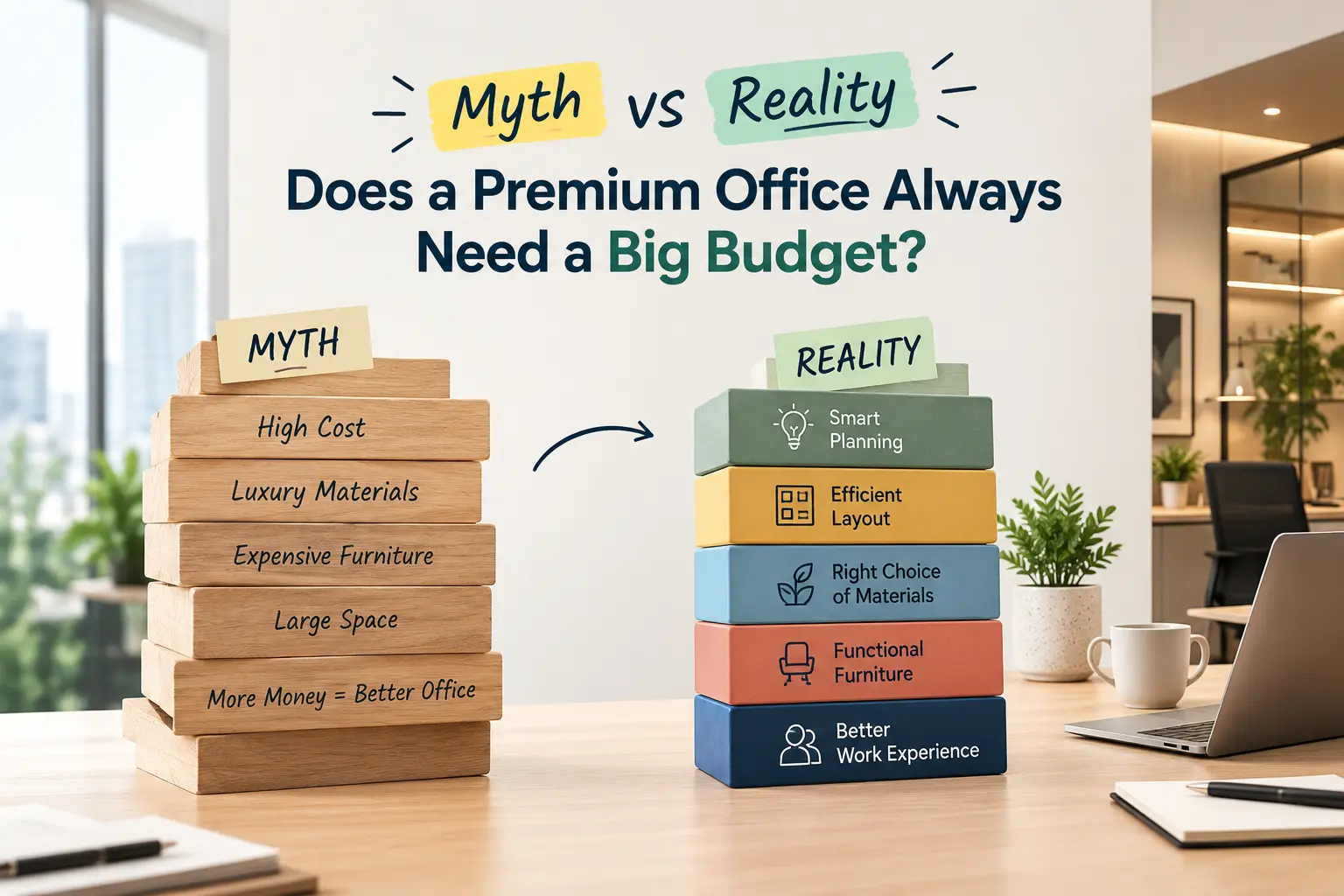

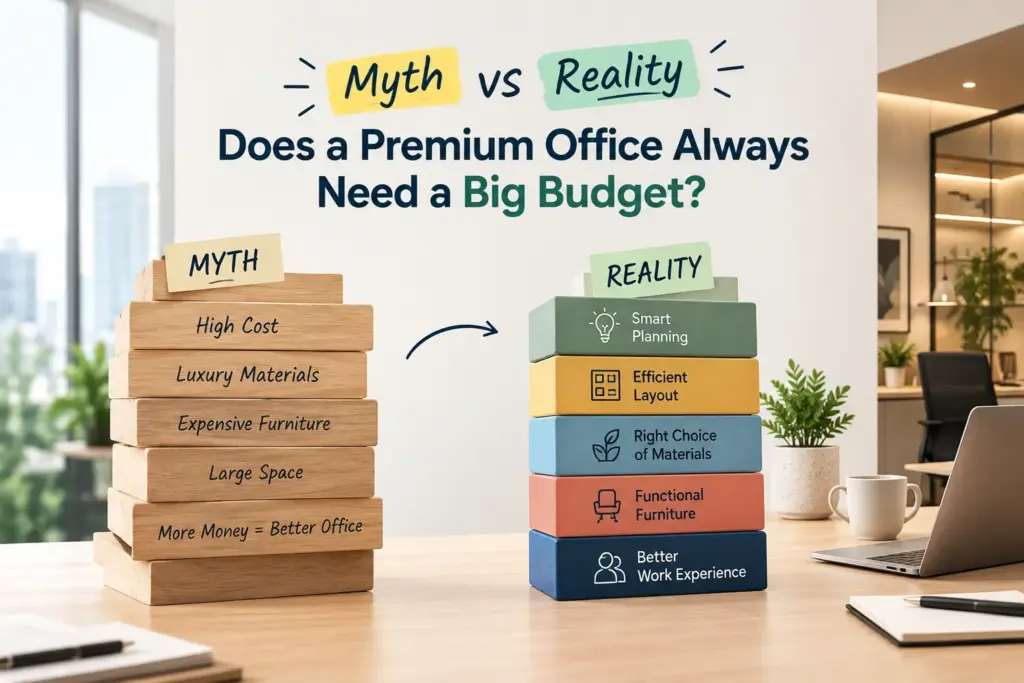
Myth vs Reality: Does a Premium Office Always Need a Big Budget?
Creating a premium office does not automatically mean spending a fortune. A premium office is less about expensive finishes and more about thoughtful planning, functionality, comfort, and visual consistency. With the right priorities, businesses can create an impressive workplace without unnecessarily driving the interior budget too high. A well-integrated approach to workplace design can also help businesses balance aesthetics, functionality, resource efficiency, and long-term performance, as highlighted by the U.S. General Services Administration’s guidance on high-performance building design.
Myth 1: Premium Means Expensive
A common misconception is that every premium office must use imported materials, designer furniture, or extravagant finishes. In reality, quality comes from selecting elements that create impact while serving a purpose. A well-planned reception, cohesive experience, comfortable furniture, and appropriate lighting can make a premium office feel sophisticated without excessive spending. The focus should be on creating a consistent experience rather than making every individual element expensive.
Reality: Smart Choices Create Value
Instead of investing equally in every area, a premium office can focus its budget on spaces employees and visitors experience most. For example, reception areas, meeting rooms, and collaborative zones may deserve stronger visual attention, while secondary areas can remain simpler. Moreover, combining standard products with a few selected statement elements can create a polished result. Planning these decisions early can also reduce unnecessary changes during execution, helping control costs while maintaining the intended design quality.
Myth 2: Luxury Requires High-End Materials
Another common belief is that only costly marble, imported wood, or designer surfaces can deliver a premium office appearance. However, modern alternatives can provide attractive finishes, durability, and visual consistency at different price points. Material selection should consider maintenance, longevity, performance, and suitability rather than price alone. The U.S. EPA’s guidance on office indoor air quality also highlights the importance of considering furnishings, building materials, ventilation, and other factors when creating a comfortable indoor environment.
Reality: Design Matters More Than Price
A premium office often feels expensive because its elements work together. Proportion, lighting, colour, furniture placement, storage, and detailing can have a greater visual effect than the individual price of a material. Furthermore, a simple palette used consistently can look more refined than a space filled with expensive finishes that compete for attention. Lighting and natural daylight are particularly important design considerations; the GSA’s indoor environmental quality guidance notes that lighting, daylight, glare control, acoustics, and views can all contribute to occupant comfort and satisfaction.
Read more: https://morphoraspaces.com/office-upgrade-without-complete-renovation/
Myth 3: Bigger Spaces Look More Premium
Size can create possibilities, but it does not automatically create quality. A smaller premium office can feel spacious when circulation is planned, and unnecessary partitions are avoided. Flexible furniture, smart storage, glass partitions, and multi-purpose areas can help a compact workplace feel organized and intentional. Flexible planning can also make future changes easier. The Whole Building Design Guide’s office planning guidance discusses the importance of natural light, views, acoustics, and integrated office design rather than relying on size alone to create an effective workplace.
Reality: Function Comes First
The best premium office balances appearance with everyday usability. Ergonomic workstations, appropriate lighting, acoustic control, accessible storage, and comfortable meeting spaces contribute to a better workplace experience. The U.S. General Services Administration’s workplace guidance highlights how high-performance workplace strategies can improve efficiency, support occupant needs, and identify opportunities for reducing costs. Therefore, spending should support both aesthetics and performance rather than focusing only on visual appeal.
Myth 4: Cutting Costs Means Cutting Quality
Budget control does not have to mean choosing the cheapest option everywhere. Instead, it means understanding where quality matters most and avoiding unnecessary expenses. A premium office can use durable materials in high-traffic areas, standard solutions where they perform well, and customized features only where they create value. For example, acoustic treatments can be selected strategically in areas where concentration, collaboration, or privacy is important. The GSA’s guidance on space reconfiguration and renovation recommends considering acoustics, flexibility, daylight, material longevity, and cost during workplace planning.
How to Build Premium on a Realistic Budget
Start by defining the workplace priorities, employee requirements, brand personality, and project budget. Then create a detailed space plan before selecting finishes and furniture. Compare alternatives based on lifecycle value, not just purchase price. In addition, coordinate design, electrical, lighting, HVAC, furniture, and execution early to reduce expensive changes later. This integrated approach is consistent with the GSA’s recommendations for cost-effective, holistic building design, which emphasise considering building systems, materials, space use, energy efficiency, and occupant needs together.
The Honest Answer
So, does a premium office always need a big budget? No. A larger budget can provide more choices, but thoughtful design can achieve a premium result at many investment levels. The key is deciding where to spend, where to simplify, and how every element contributes to the overall experience.
Ultimately, a premium office should feel intentional rather than merely expensive. Prioritize functionality, consistency, comfort, lighting, acoustics, and details that people actually notice and use. With professional planning and disciplined budgeting, businesses can create an office that looks refined, supports productivity, and represents their brand without unnecessary extravagance. As workplace guidance from the GSA and EPA demonstrates, effective workplace design is about more than appearance—it also involves comfort, indoor environmental quality, performance, and long-term value.