
Minimalist vs Maximalist Office Design: Which Style Works for Your Business?
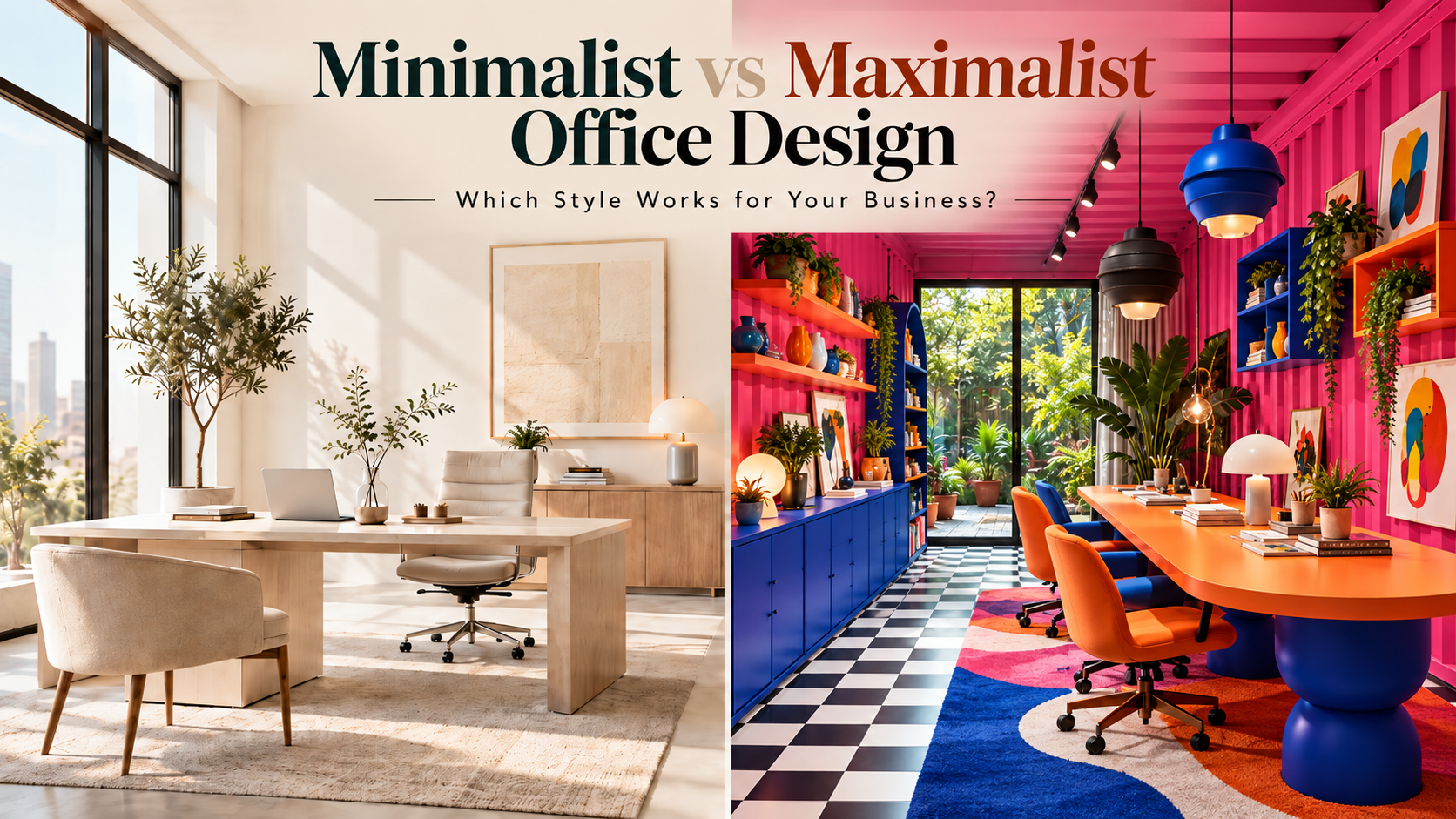
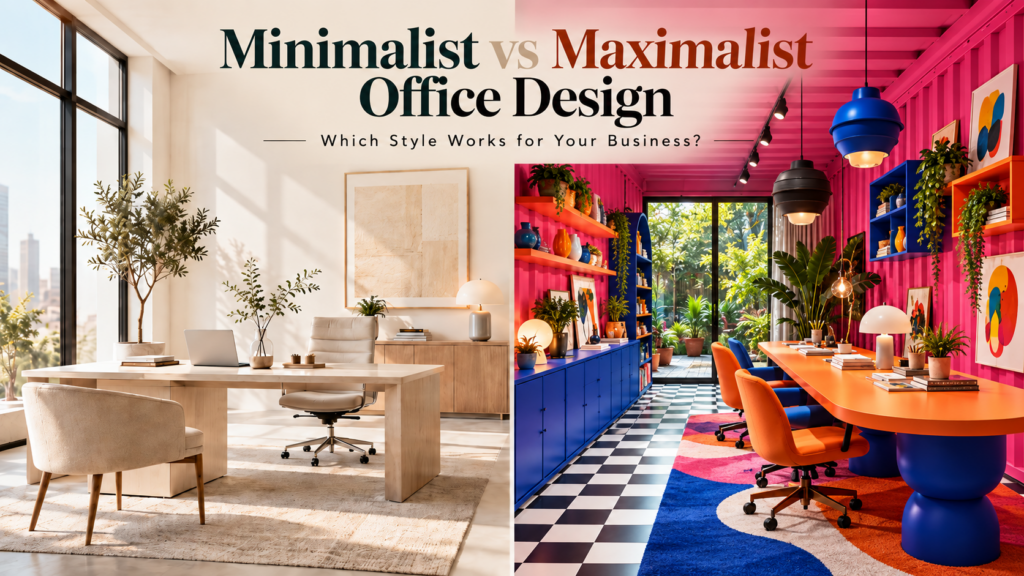
Minimalist Office Design and Maximalist Office Design represent two approaches to creating a workplace. Minimalism focuses on simplicity, clean lines, restrained colours, and purposeful furniture, while maximalism embraces stronger colours, layered materials, patterns, artwork, and visual variety. However, neither approach automatically suits every business. The direction depends on your brand, work culture, space, and experience. Explore Gensler’s workplace research on design and employee experience
What Is Minimalist Office Design?
Minimalist Office Design uses fewer visual elements and prioritises function. Neutral palettes, streamlined desks, concealed storage, natural materials, and clear circulation are common. This approach creates a calm, organised environment. Moreover, fewer decorative elements can make maintenance and future changes simpler when planned carefully. Read more about workplace design and the importance of purposeful spaces
What Is Maximalist Office Design?
Maximalist Office Design takes a more expressive approach. Rich colours, textures, lighting, artwork, plants, and distinctive furniture can give the workplace character. This style can suit creative companies or brands that want an energetic environment. Nevertheless, maximalism works best when visual variety is coordinated. Explore research on workplace experiences and creative environments
Consider Your Brand Identity
Your brand should influence the choice between Minimalist Office Design and maximalism. A finance, technology, or consulting company may prefer a restrained environment that communicates precision and professionalism, while a creative studio may use bolder colours and artwork. Therefore, the workplace should translate brand values into materials, colours, furniture, and spatial details. Read about designing workplaces around organisational culture and people
Think About Your Work Culture
Work culture is equally important when selecting Minimalist Office Design or an expressive style. If employees require quiet concentration, visual simplicity may help create a less distracting environment. On the other hand, businesses built around brainstorming, social interaction, and creative exchange may benefit from varied settings. Gensler’s 2025 research emphasises giving employees different spaces and greater choice. Read the Gensler Global Workplace Survey 2025
Read more: https://morphoraspaces.com/premium-office-big-budget-myth-vs-reality/
Balance Aesthetics With Comfort
Regardless of whether you choose Minimalist Office Design or maximalism, comfort should remain central. Ergonomic furniture, lighting, acoustic control, thermal comfort, and daylight can influence workplace experience. Furthermore, the WELL Building Standard addresses light, comfort, acoustics, and other environmental factors as part of healthier workplace design. A beautiful office should also be practical to use. Explore the WELL Building Standard’s Comfort requirements
When Minimalism May Work Better
Minimalist Office Design can suit businesses that value focus, efficiency, order, and a timeless appearance. It can also work well in smaller offices where excessive visual elements may make the environment feel crowded. A neutral base does not have to mean a boring workplace. Instead, texture, greenery, lighting, artwork, and selected accent colours can introduce personality without overwhelming the space. Explore Gensler’s research on spaces designed for focused work
When Maximalism May Work Better
Maximalist Office Design can suit businesses that want an expressive, memorable, and culturally distinctive workplace. Creative agencies, media companies, and studios may use stronger visual elements to create energy and identity. Additionally, maximalism can help different zones feel distinct, such as a vibrant collaboration area or colourful breakout space. Read about workplace experiences that move beyond the traditional corporate office
A Hybrid Approach Can Work
You do not have to choose completely between Minimalist Office Design and maximalism. A balanced workplace can combine a neutral architectural foundation with carefully selected statement elements. For example, a simple workstation zone could connect to a bold meeting room, while a restrained reception area could feature distinctive artwork. As a result, the office can feel cohesive while still having character. Explore Gensler’s research on providing a variety of workplace settings
Choosing the Right Style for Your Business
The best choice between Minimalist Office Design and maximalism should come from how your business operates, not from a trend alone. Consider your employees, clients, brand identity, space, maintenance requirements, budget, plans, and growth over time. Ultimately, the most effective office is one that supports the work being done for your business while creating a comfortable and recognisable environment. Thoughtful planning matters more than choosing a label. Explore Gensler’s latest workplace research