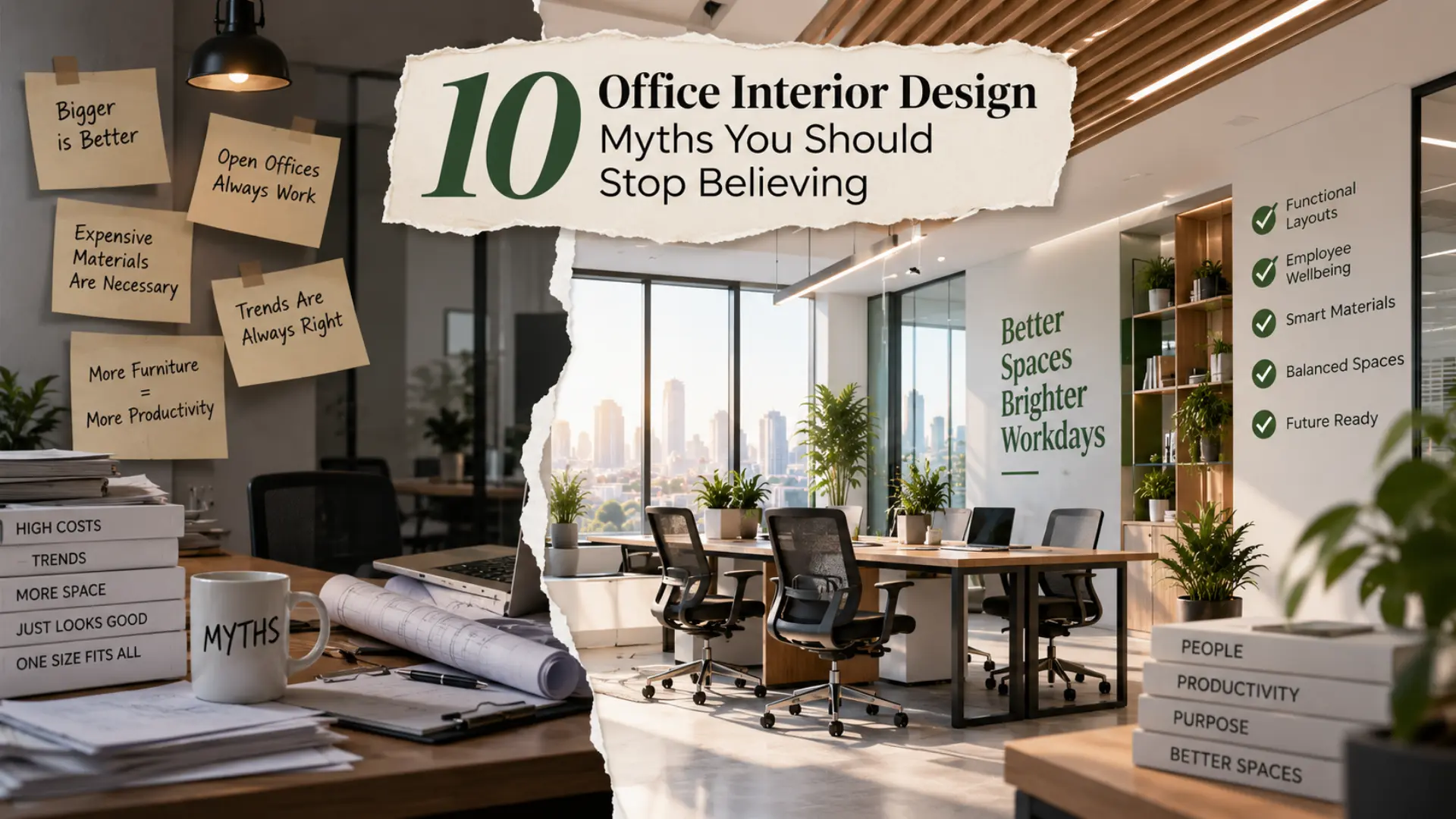


10 Office Interior Design Myths You Should Stop Believing
Office Interior Design is surrounded by assumptions that can lead to mistakes. From believing bigger is better to assuming premium materials are essential, these myths can affect budgets and functionality. Let’s separate beliefs from reality before your project.
Myth 1: Office Interior Design Is Only About Looks
Many people think Office Interior Design focuses mainly on colours, furniture, and decoration. In reality, successful design also considers circulation, ergonomics, lighting, acoustics, storage, and employee needs. OSHA’s office workstation guidance highlights factors such as workstation arrangement, comfort, posture, and the working environment. Therefore, an attractive workplace should also make everyday tasks easier.
Myth 2: A Bigger Office Is Always Better
A larger floor area does not automatically create better Office Interior Design. Poor planning can leave space unused, while smaller workplaces can feel efficient with smart zoning. Moreover, additional square footage can increase rent and fit-out costs. GSA’s workplace optimization guidance emphasizes evaluating human, space, and technology needs when planning workplaces.
Myth 3: Open Offices Are Always More Productive
Open layouts are frequently presented as the perfect solution for Office Interior Design. However, employees also need privacy, concentration, and spaces for confidential conversations. GSA’s workplace guidance on acoustic comfort and focus spaces notes the importance of balancing collaboration areas with spaces that support focused and private work. A balanced workplace can therefore combine collaboration areas with meeting rooms, focus spaces, and acoustic solutions.
Myth 4: Premium Design Requires Expensive Materials
Luxury finishes are not the only route to impressive Office Interior Design. Good proportions, consistent materials, lighting, and selected focal points can create a sophisticated appearance. Instead, businesses should choose materials according to durability and performance. GSA’s workplace design policy includes considerations such as furnishings, workplace efficiency, and responsible use of resources.
Myth 5: More Furniture Means Better Use of Space
Filling every corner with desks, cabinets, and seating can weaken Office Interior Design. Crowded layouts restrict movement and make workplaces uncomfortable. Furthermore, circulation zones are essential for accessibility. OSHA’s workstation space guidance explains the importance of providing adequate clearance around workstations so users have sufficient space to work comfortably.
Read more: https://morphoraspaces.com/premium-office-big-budget-myth-vs-reality/
Myth 6: Office Design Should Follow Every Trend
Following every workplace trend can make Office Interior Design expensive and quickly outdated. Trends can inspire, but they should not replace business requirements. Consequently, timeless materials and adaptable furniture can provide stronger long-term value. GSA’s workplace optimization guidance focuses on flexible, adaptable workspaces that respond to changing human, space, and technology needs.
Myth 7: Lighting Is Just a Decorative Feature
Lighting has a functional role in Office Interior Design, not merely a decorative one. Different activities require appropriate illumination, while glare can create discomfort. GSA’s lighting guidance explains how task lighting, adjustable lighting, and appropriate workplace illumination can support comfort and visual tasks. Thus, lighting should be planned alongside furniture and activities.
Myth 8: Employees Do Not Influence Design Decisions
Management may control the budget, but employees experience Office Interior Design every day. Their workflows, collaboration patterns, storage requirements, and comfort should inform planning. GSA’s indoor environmental quality guidance highlights occupant comfort and the value of giving users some control over aspects such as lighting, temperature, airflow, and noise. Involving users early can therefore reveal practical requirements that may otherwise be overlooked.
Myth 9: A Beautiful Office Will Automatically Improve Productivity
Visual appeal can support a positive impression, but Office Interior Design alone cannot guarantee higher productivity. Workplace performance also depends on technology, workload, and culture. Nevertheless, thoughtful environments can support comfort, collaboration, concentration, and experience when designed around needs. GSA’s guidance on workplace focus and collaboration spaces discusses the importance of creating appropriate environments for both collaboration and focused work.
Myth 10: Good Design Means Spending the Maximum Budget
The best Office Interior Design is not necessarily the most expensive. Strategic budgeting means investing in important elements and simplifying areas where premium specifications add little value. Finally, clear planning and coordination between design and execution can prevent unnecessary costs. GSA’s workplace optimization resources include cost-effective, professionally designed workplace solutions and approaches focused on making better use of available space.
The Reality Behind Better Office Design
These myths show why Office Interior Design should begin with business objectives rather than assumptions. Evaluate your space, understand how people work, prioritize comfort and functionality, and select materials based on value. GSA’s workplace design policy addresses factors including flexibility, acoustics, privacy, furnishings, space allocation, and workforce needs.
Ultimately, effective Office Interior Design is about creating a workplace that looks purposeful and performs well. Before approving a layout, question whether each decision supports your people, brand, budget, and future needs. A thoughtful approach can deliver a professional workplace without following every myth.