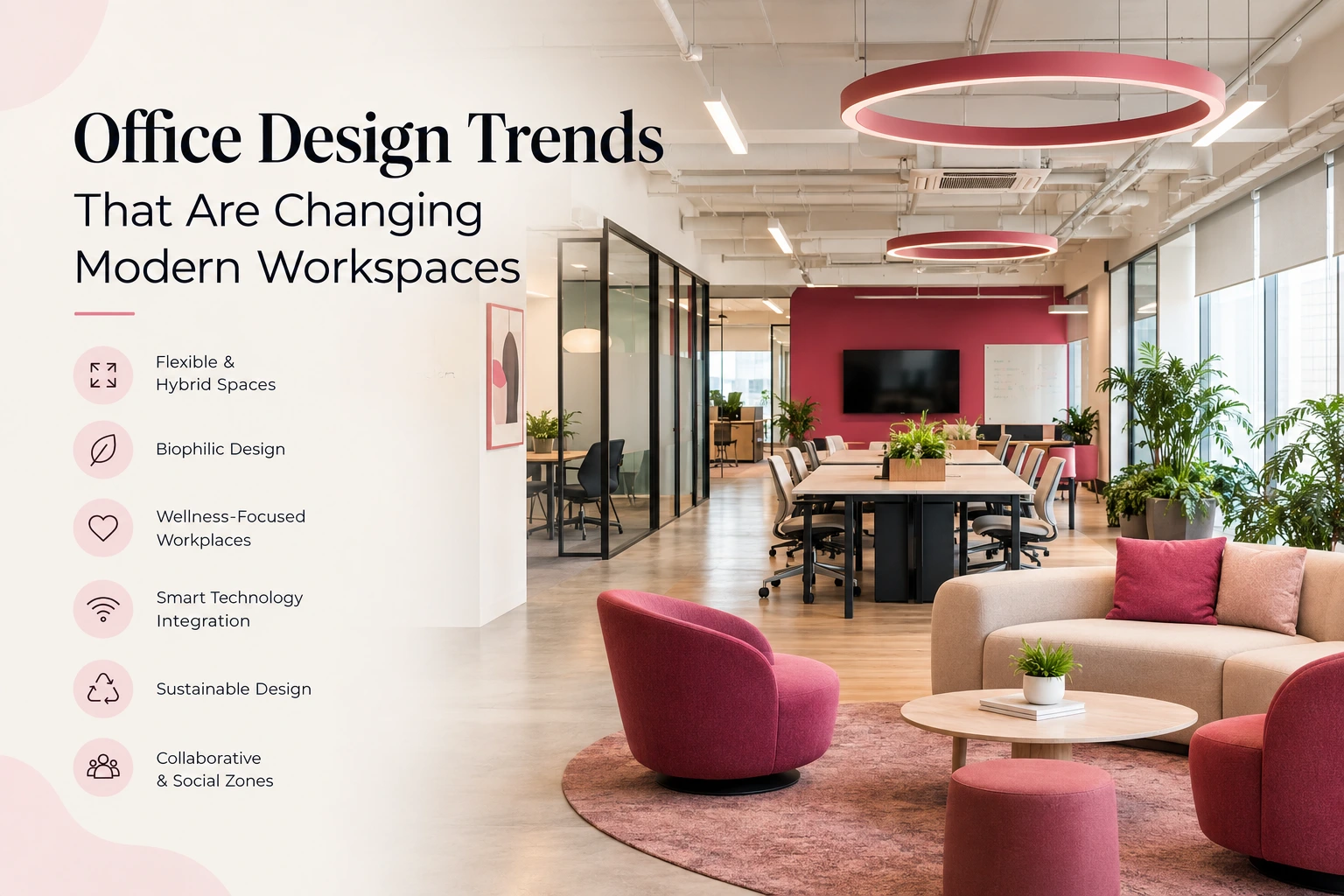

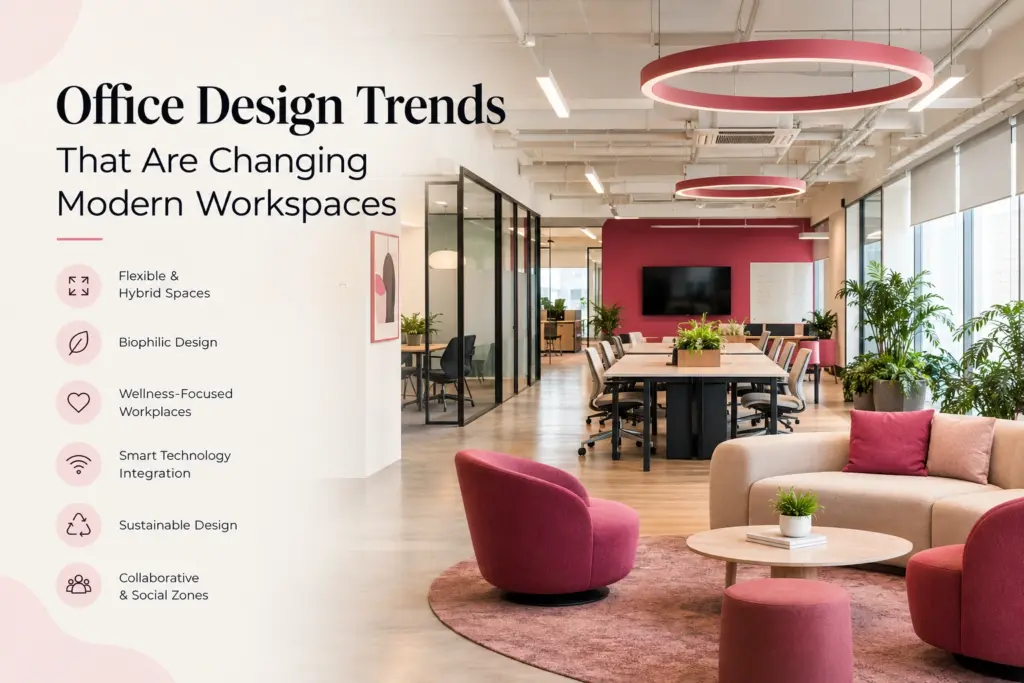
Office Design Trends That Are Changing Modern Workspaces
Office Design Trends are moving beyond rows of assigned desks toward workplaces that support flexibility, collaboration, wellbeing, and changing business needs. As hybrid work becomes more structured, companies are reconsidering how space is used. Therefore, modern offices are increasingly designed around activities rather than fixed seating alone. Explore the latest workplace research from Gensler
Flexible and Activity-Based Spaces
One of the most visible Office Design Trends is the rise of flexible, activity-based planning. Instead of giving every employee one permanent workstation, offices can combine shared desks, focus rooms, collaboration areas, phone booths, and informal lounges. This approach helps teams select settings according to the task. Learn more about flexible workplace design from Gensler
More Spaces for Collaboration
Another important shift in Office Design Trends is the growing emphasis on collaboration. Offices are being planned with small meeting rooms, open discussion areas, project tables, and social hubs that encourage spontaneous interaction. JLL reports that companies are increasingly investing in spaces that prioritise collaboration and community. Consequently, the office is becoming a destination for connection, teamwork, and culture. Read JLL’s workplace insights
Wellbeing-Centred Workplace Design
Wellbeing is also shaping Office Design Trends. Daylight, comfortable furniture, greenery, acoustic control, air quality, and break spaces can support a healthier environment. Moreover, workplace wellbeing is becoming connected with employee experience. Explore WHO guidance on healthy, safe and resilient workplaces
Technology-Ready Workspaces
Technology is another major part of Office Design Trends. Meeting rooms increasingly need reliable video conferencing, wireless connectivity, integrated displays, and easy-to-use controls for hybrid participation. Smart sensors can provide information about occupancy and environmental conditions. As a result, technology should be integrated into the planning stage instead of added after construction. Explore workplace technology and design research from Gensler
Sustainable and Efficient Interiors
Sustainability continues to influence Office Design Trends through energy-efficient systems, responsible materials, adaptive reuse, and greener building strategies. In India, CBRE reported that more than 70% of newly completed office space during Q3 2025 was green-certified. Furthermore, companies are considering environmental goals when evaluating workplace assets and operations. Read CBRE India’s Q3 2025 office market report
Hospitality-Inspired Office Spaces
Modern Office Design Trends are also bringing hospitality elements into workplaces. Comfortable lounges, café-style breakout areas, warm lighting, layered materials, and attractive communal spaces can make offices feel more welcoming. Designers are using residential and hospitality-inspired details to support interaction and create a stronger sense of place. Explore Gensler’s workplace experience research
More Focus Rooms and Quiet Zones
While collaboration is important, Office Design Trends are not eliminating the need for concentration. Quiet rooms, acoustic booths, library-style corners, and enclosed focus spaces provide alternatives to busy open areas. This balance matters because employees perform different tasks throughout the day. Therefore, successful offices offer both energetic shared spaces and quieter environments. Read Gensler’s research on different workplace work modes
Read more: https://morphoraspaces.com/office-interior-design-myths/
Flexible Furniture and Modular Planning
Furniture is becoming more adaptable as Office Design Trends respond to changing teams and business requirements. Movable tables, modular partitions, mobile storage, and reconfigurable seating allow spaces to change without major construction. Additionally, modular planning can make future workplace adjustments easier when headcount, work patterns, or departmental needs change. Explore Gensler’s workplace research
Designing for Experience and Identity
Office Design Trends are increasingly focused on creating spaces that express company identity. Colour palettes, materials, artwork, lighting, and local references can communicate culture in subtle ways. Gensler’s 2025 workplace research highlights the growing importance of human-centric design and workplaces that people choose to use. Ultimately, design should make the office functional while also giving employees a reason to value the workplace experience. Read the Gensler Global Workplace Survey 2025
The Future of Office Design
The most relevant Office Design Trends point toward workplaces that are flexible, connected, sustainable, technology-ready, and human-centred. No layout works for every organisation. Instead, businesses should study how teams work, understand space utilisation, and design around activities. With thoughtful planning, modern office interiors can support collaboration, focus, wellbeing, and long-term adaptability. Explore the latest Gensler workplace research