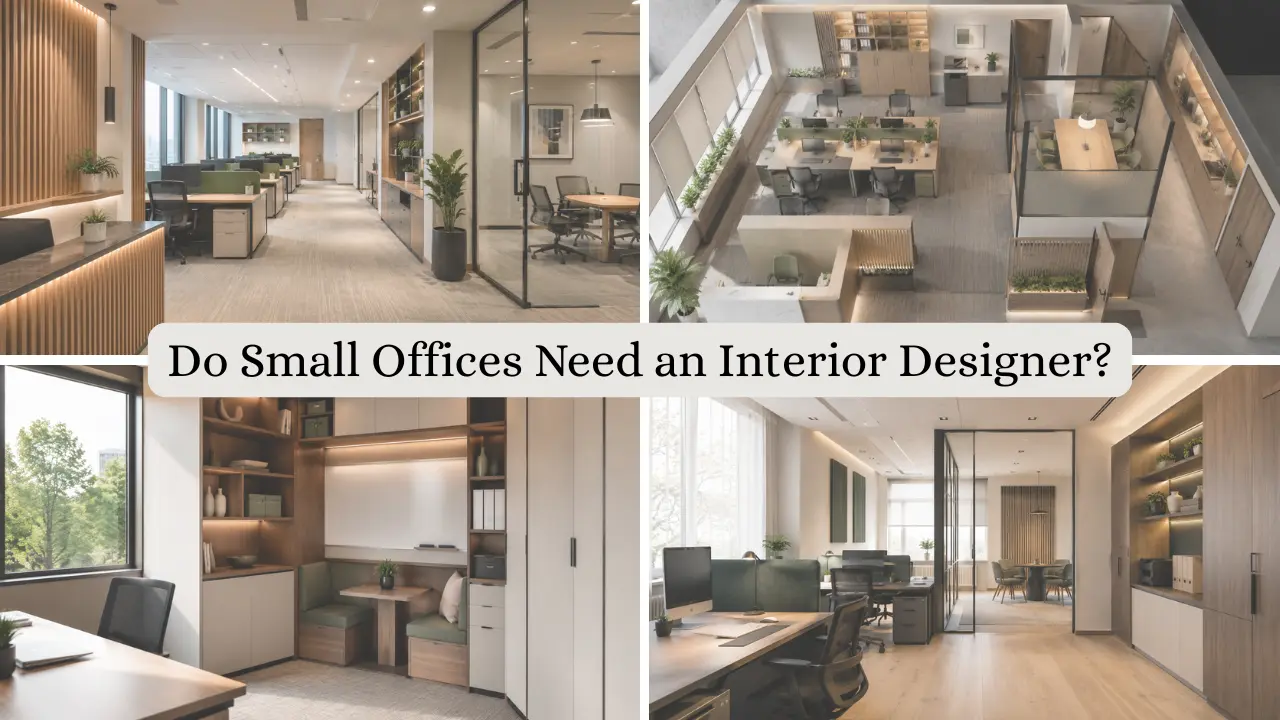

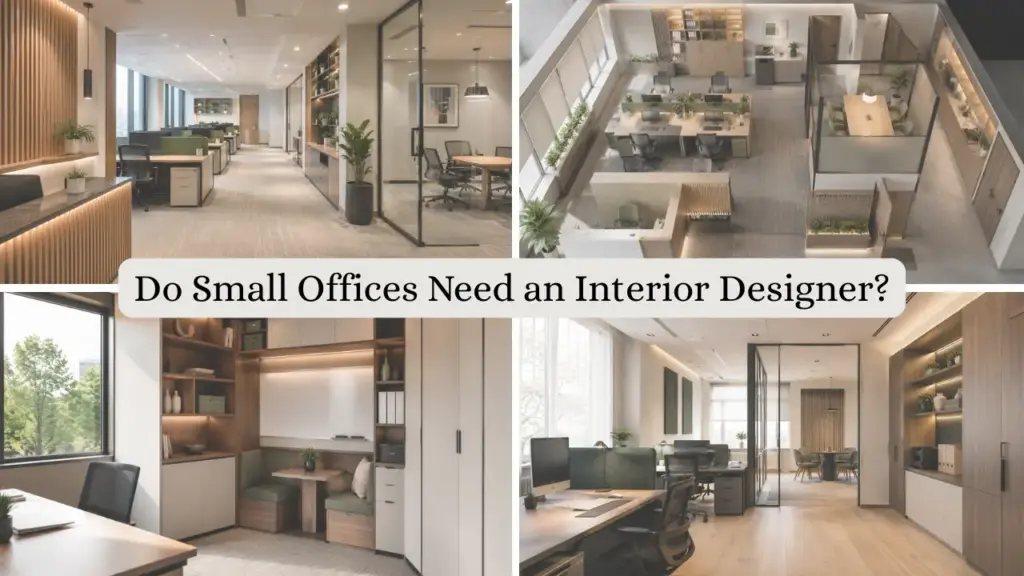
Do Small Offices Need an Interior Designer? Here’s the Honest Answer
Running a small office often means watching every expense closely. So, is hiring an Interior Designer really necessary? The honest answer is yes, especially when every square foot matters. An Interior Designer can help you avoid costly layout mistakes, plan circulation, select practical furniture, and create a workplace that supports both your team and your brand. With thoughtful planning, even a compact office can feel open, organised, comfortable, and professional. This investment can also reduce the need for expensive changes once the office is operational.
Why Small Offices Need Better Planning
A small workplace has less room for errors. An Interior Designer understands how to balance workstations, storage, meeting areas, movement, lighting, and privacy without making the office feel crowded. Moreover, space planning can identify what the business needs before money is spent on furniture or construction.
Making Every Square Foot Work
In a compact office, unused corners quickly become wasted opportunities. An Interior Designer can turn difficult areas into useful storage, collaboration zones, reception points, or focused workspaces. Instead of simply placing desks wherever they fit, the layout can be planned around how employees move, communicate, meet, and work throughout the day.
Ergonomics Should Not Be Ignored
Comfort is not a luxury reserved for large offices. An Interior Designer can help select suitable desk heights, seating, monitor positions, lighting, and workstation arrangements. The U.S. General Services Administration recommends adjustable furniture and ergonomic workstations to improve comfort and reduce physical strain. Similarly, awkward postures and prolonged time in the same position can contribute to muscle fatigue and physical strain.
Read more: https://morphoraspaces.com/interior-design-pricing-truth/
Lighting and Acoustics Matter
Small offices can quickly become noisy or poorly lit when several functions share one room. An Interior Designer can plan lighting according to different tasks and use materials or layouts that help manage sound. Furthermore, it explains that thermal conditions, lighting, acoustics, and ventilation collectively affect the quality of an office environment.
Your Office Also Represents Your Brand
Even a small office communicates something about the company. An Interior Designer can translate your brand personality into materials, colours, furniture, signage, and spatial details without making the workplace an expensive showroom. Therefore, a thoughtfully designed office can feel professional and consistent while still being practical for everyday work.
But Do You Always Need One?
Not every small office requires a full-service Interior Designer. If the space is straightforward, your requirements are limited, and you have strong knowledge of furniture, layouts, contractors, and building services, you may be able to manage a simpler project yourself. However, once electrical changes, partitions, custom furniture, lighting, storage, or multiple vendors become involved, professional guidance can save significant time and reduce mistakes.
What Should You Look For?
If you decide to hire an Interior Designer, look beyond attractive portfolios. Ask about their experience with commercial workplaces, project coordination, space planning, material selection, budgeting, timelines, and execution. In addition, check whether they understand your team’s actual working patterns. A beautiful office that does not support daily operations is not a successful project.
The Honest Verdict
So, does a small office need an Interior Designer? Not always, but professional design becomes valuable when space is limited, requirements are complex, or mistakes could be expensive. An Interior Designer does more than make an office look attractive. They help make the available space work harder, improve comfort, support productivity, and create an environment that reflects the business.
Ultimately, the decision should depend on your goals rather than office size alone. A small office can benefit enormously from thoughtful planning, just as a large office can suffer from poor planning. Before making the decision, define your budget, requirements, timeline, and priorities. Then decide whether professional expertise can deliver enough value to justify the investment.