
Design and Build vs Hiring Separate Vendors: Which Is Better for Your Office?
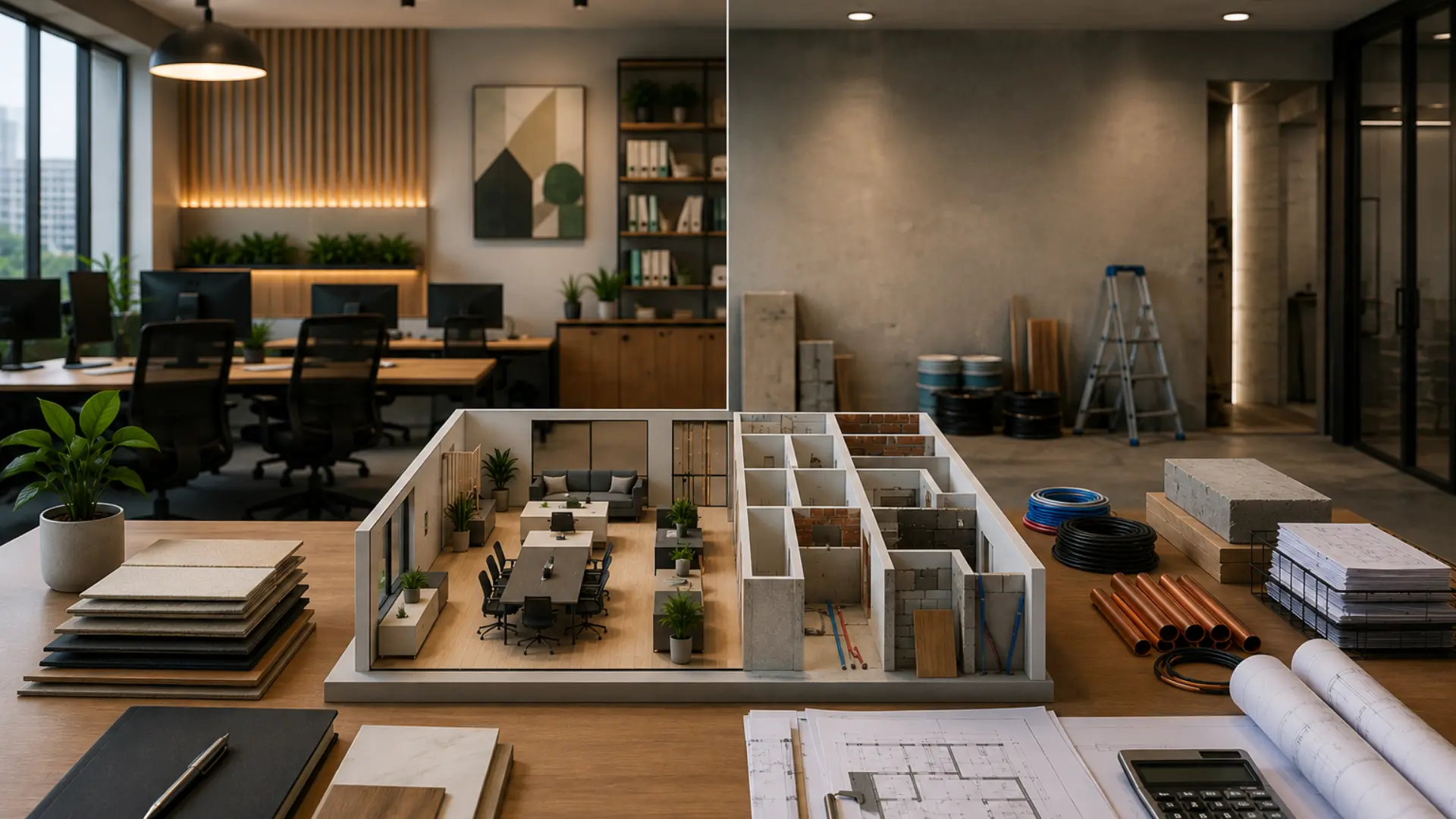
Design and Build: Choosing between an integrated team and several specialists shapes the cost, speed, and control of a workplace project. Design and Build places design and execution under one primary entity, while the separate-vendor model divides architecture, civil work, electrical services, furniture, and other packages. First, office interior delivery should carefully match the company’s deadline, budget, project complexity, and internal management capacity. Neither structure is universally superior; each creates different responsibilities, risks, and levels of client involvement.
In Design and Build, one team develops the concept, coordinates technical services, manages procurement, and executes the site work. The Design-Build Institute of America describes the method as one entity providing design and construction through a single contract. Consequently, office interior delivery can become simpler because questions move through one primary contact. Early contractor input may also help designers understand buildability, material pricing, sequencing, and potential site challenges before important decisions become expensive to change.
How the Separate-Vendor Approach Works
The separate-vendor approach allows a business to appoint an independent designer and tender construction, electrical, HVAC, furniture, and specialist packages individually. Moreover, office interior delivery through separate contracts can create stronger price competition and independent oversight of the contractor’s work. The trade-off is coordination. Someone representing the client must compare drawings, confirm responsibilities, manage interfaces, track approvals, and align several schedules. Without project leadership, gaps between packages can create delays, variations, duplicated work, or disputes.
Comparing Cost and Budget Control
Budget comparison should extend beyond the lowest quotation. Design and Build can improve cost visibility because design decisions and construction estimates develop together. However, office interior delivery under one contract requires a detailed scope, specifications, allowances, exclusions, and change procedures. Separate tender packages may reveal competitive prices, but savings can disappear when coordination gaps cause redesign or rework. Every proposal should be assessed on cost, quality, timeline, warranties, and risk rather than headline price alone.
Timeline and Project Coordination
Timeline pressure often makes the delivery structure more important. An integrated team may overlap design development, procurement, and selected construction activities when risks are properly controlled. The American Institute of Architects notes that Design and Build can involve continuous execution and overlapping phases. Therefore, office interior delivery may progress faster overall with fewer contractual handoffs. Separate vendors usually require completed designs, tendering, appointments, and mobilisation, although an experienced project manager can coordinate these stages effectively.
Read more: https://morphoraspaces.com/interior-design-pricing-truth/
Accountability and Responsibility
Accountability is another difference. The Associated General Contractors of America identifies one entity as the single point of responsibility for design and construction in Design and Build. Nevertheless, successful office interior delivery depends on a clear brief, documented approvals, quality standards, and reporting. Separate vendors provide specialist contracts, but responsibility can become disputed when a problem involves drawings and execution. The client may need to determine which party must investigate, correct, and fund the solution.
Quality and Design Control
Quality does not depend on the number of contracts. An integrated team can connect creative ideas with construction knowledge, while an independent designer can protect design intent and inspect workmanship. In addition, office interior delivery improves when the client reviews portfolios, qualifications, material samples, mock-ups, timelines, and references before the appointment. Performance requirements are essential for both models. Quality becomes difficult to protect when specifications are vague, approvals are rushed, or decisions focus exclusively on price.
Which Option Should Your Business Choose?
Ultimately, Design and Build suits businesses seeking faster coordination, simpler communication, and one primary accountable team. Separate vendors may suit organisations with internal project expertise, specialist requirements, or a preference for independent design control. The right office interior delivery choice should reflect project size, complexity, deadline, governance, and available resources. Before signing, confirm the scope, payment milestones, programme, exclusions, warranties, approval process, variation rules, and handover responsibilities so expectations remain clear from concept to completion.